
Level switches
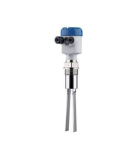
Description of Level Switches
Level switches are devices designed for discrete (point) level detection of liquids or bulk solids in tanks, vessels, and pipelines. They generate an electrical, pneumatic, or relay signal when the medium reaches a predefined point (min/max or multiple set points). Unlike continuous level transmitters, level switches do not measure the current level value—they only detect when a threshold is crossed.
The KROHNE and Tecfluid portfolios feature two primary types of level switches:
-
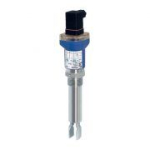
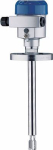
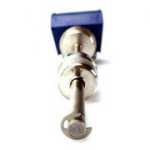
Vibrating Fork Level Switches
-
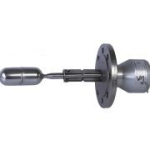
Float-Type Level Switches
-
Tecfluid Series LD (LD60 — for solids, LD61 — for liquids, LD6XN/LD6XR — intrinsically safe/explosion-proof versions) Designed for reliable detection of liquid and bulk solid levels even in challenging conditions (foam, buildup, high viscosity up to 10,000 cSt, density >0.6 kg/l). The fork vibrates at its resonant frequency; when the medium contacts the fork, the frequency shifts, and the electronics switch the output. Response time ~1 s, hysteresis ±2 mm. Fork length up to 2 m. Materials: stainless steel 316L (optional HALAR coating). Pressure rating up to PN25, process temperature -30…+115 °C. Outputs: PNP transistor, relay, NAMUR. Hazardous area approvals: ATEX Ex ia/Ex d. Housing IP65–IP67, LED status indication.
-
Tecfluid Series LC / LCM / LC40 Operation based on magnetic reed switches or microswitches. A float with an embedded magnet moves along a guide tube or lever; when the set point is reached, the magnet actuates the reed/microswitch. • Series LC/LCM — vertical top or side-chamber mounting. Length up to 6 m, up to 6 switching points (bistable RBC or monostable RSC reeds). Liquid density from 0.6 kg/l, viscosity up to 1500 cSt. Materials: stainless steel 316L, PVC, PP, PVDF, PTFE. Pressure PN10–PN16, temperature up to +150 °C. Housing IP65–IP67. • Series LC40 — side or top mounting, heavy-duty design for high pressure/temperature (up to +300 °C and high pressure on request). Switching differential 52–1100 mm, density 0.45–3 kg/l, viscosity up to 3000 cSt. Outputs: SPDT microswitch, inductive sensor, reed, pneumatic. Explosion-proof Ex d IIC T6.
-
KROHNE (from the general level switches page) offers a complete range:
-
Vibrating fork (e.g., OPTISWITCH series) for liquids and solids
-
Capacitive
Main Application Areas
-
Chemical and petrochemical industry — level control of aggressive liquids (acids, alkalis, solvents), pump dry-run/overfill protection.
-
Oil & gas production and refining — separators, storage tanks, pump protection.
-
Food & beverage and pharmaceutical industry — hygienic versions for milk, beer, juices, pharmaceutical solutions (CIP/SIP compatible).
-
Water and wastewater treatment — pumping stations, reagent tanks.
-
Power generation — condensate tanks, boilers, cooling systems.
-
Marine and transportation — tank level monitoring on ships, road/rail tankers.
-
Mechanical engineering — hydraulic systems, lubrication systems.
-
Bulk solids handling (vibrating fork only) — silos, hoppers.
Advantages of Level Switches
-
Simplicity and reliability — minimal moving parts (vibrating forks have virtually no mechanical wear).
-
Immunity to process conditions:
-
Wide operating range — pressure up to several hundred bar, temperature from -50 to +300 °C, explosion-proof versions.
-
Easy calibration and maintenance — often no disassembly required, LED status indication.
-
Cost-effectiveness — low total cost of ownership, long service life.
-
Versatility — one device can monitor multiple points (up to 6 in float switches), various outputs (relay, NAMUR, 4–20 mA with HART in some KROHNE models).
-
Process safety — pump dry-run protection, spill prevention, integration into emergency shutdown systems (SIL-capable in KROHNE models).
-
Vibrating forks: unaffected by foam, buildup, turbulence, changes in dielectric constant or conductivity.
-
Float switches: handle high viscosity and aggressive media when materials are properly selected.