
Measurement and detection of the level of bulk products
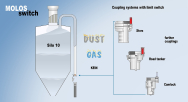
Level Sensors and Switches for Bulk Solids
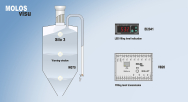
Level sensors and switches for bulk solids (grain, cement, powders, pellets) are instruments designed for accurate point-level detection ("full/empty") or continuous level measurement in silos, hoppers and containers. They operate reliably in harsh conditions (dust, extreme temperatures, pressure) and prevent overfilling or material run-out. The range includes both contacting and non-contacting devices from leading manufacturers (Mollet, ENVEA, KROHNE) with ATEX certification for explosive atmospheres.
Operating Principle
-
80 GHz FMCW Radar: Non-contact continuous measurement using frequency-modulated continuous wave microwaves; highest accuracy and beam focusing even in extremely dusty silos.
-
Guided Wave Radar (TDR / reflex radar): Contact/semi-contact measurement along a probe or cable; perfect for very low dielectric constants (εr > 1.4), foam, interface and tall silos up to 75 m.
-
Pulse Radar (ToF, usually 26 GHz): Classic non-contact radar using time-of-flight method; suitable for medium-dust conditions up to 30–40 m.
-
Ultrasonic: Non-contact measurement with sound waves; cost-effective solution for clean environments without heavy dust.
-
Capacitive: Contact/semi-contact, reacts to change in capacitance; universal but sensitive to buildup.
-
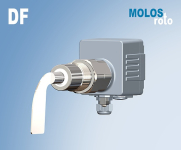
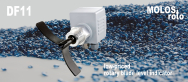
Rotary Paddle: Mechanical rotating paddle stops when covered; reliable point-level switch for heavy-duty applications.
-
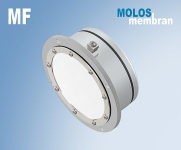
Membrane / Pressure Plate: No power required, membrane deforms under material pressure; simple point-level switch.
-
Vibrating Fork: Vibration frequency changes when covered; ideal for granules and powders, resistant to buildup.
-
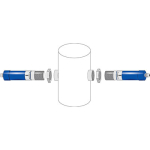
Microwave Barrier (Doppler): Non-contact transmitter-receiver barrier; detects flow or presence even through vessel walls.
-
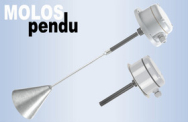
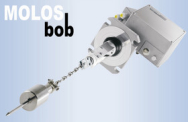
Plumb Bob / Yo-Yo (tape type): Mechanical lowering of a weight on a tape; continuous measurement completely independent of dust and dielectric properties.
Main Application Areas
Monitoring of bulk solids in agriculture (grain storage), food & beverage (flour, sugar), cement plants, chemical and pharmaceutical industries, power generation (coal, ash), and woodworking. Used in silos, hoppers, conveyor transfer points for process automation, overfill/empty protection and in explosive (ATEX) zones.
Advantages of Radar Level Transmitters (especially 80 GHz FMCW and Guided Wave Radar)
-
Completely non-contact (free-space radar) or guided contact (TDR) – no wear or buildup problems
-
Immune to dust, steam, condensation, temperature and pressure extremes (-40…+200 °C, up to 100 bar)
-
Extremely high accuracy (1–2 mm) and long ranges (up to 100 m free-space, 75 m guided)
-
Suitable for almost all bulk solids, even very low dielectric materials, foam and interface layers
-
ATEX/IECEx certified for all explosion zones
-
Easy integration via 4–20 mA/HART/Profibus, minimal maintenance, service life > 10 years
-
Best price/performance ratio for demanding and dusty applications.